Choosing the best leaf blower isn’t as simple as picking the most expensive model or the one with the highest power rating. The “best” leaf blower depends on your garden size, the type of debris you’re clearing, how often you use it, and your budget. A compact cordless model might be perfect for a small patio, while a powerful petrol blower is better suited for a large, tree-filled property.
In this guide, we’ll break down what really makes a leaf blower the best, explore the different types available, and recommend top options for every garden size.
What Does “Best” Really Mean?
The best leaf blower is the one that:
- Matches your garden size
- Has enough power for your typical debris (dry leaves vs wet piles)
- Is comfortable to use
- Fits your budget
Two key performance measurements matter:
- CFM (Cubic Feet per Minute): Measures airflow volume. Higher CFM = better at moving large piles.
- MPH (Miles Per Hour): Measures airspeed. Higher MPH = better at dislodging stuck leaves.
For most homeowners, a balance of airflow, battery life (if cordless), weight, and noise level determines what’s truly “best.”
Types of Leaf Blowers
There are three main types of leaf blowers: corded electric, cordless (battery-powered), and petrol.
1. Corded Electric Leaf Blowers
Corded blowers plug directly into a power outlet.
Pros:
- Lightweight
- Affordable
- Unlimited runtime
- Low maintenance
Cons:
- Limited by cable length
- Less powerful than petrol
- Extension cords can be inconvenient
These are ideal for small gardens, patios, and driveways where access to power is easy.
2. Cordless (Battery-Powered) Leaf Blowers
Cordless models are increasingly popular thanks to improved battery technology. Brands like Ryobi, Bosch, and Makita offer strong lithium-ion battery systems.
Pros:
- Portable and convenient
- Quieter than petrol
- Low maintenance
- No extension cord
Cons:
- Limited runtime (20–60 minutes)
- Batteries may need replacing after a few years
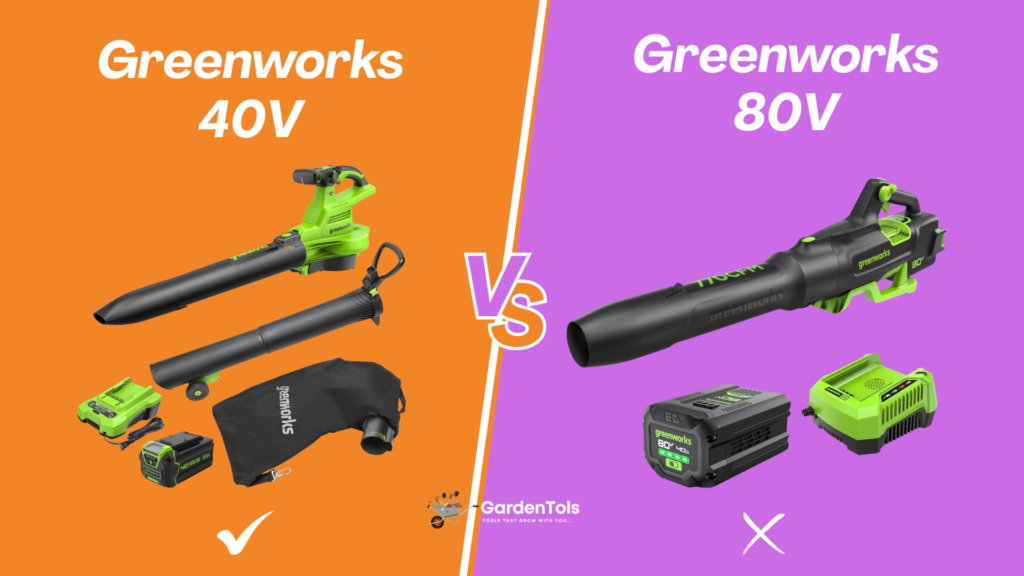
Voltage typically ranges from 18V for light tasks to 36V or 40V for heavier work.
3. Petrol Leaf Blowers
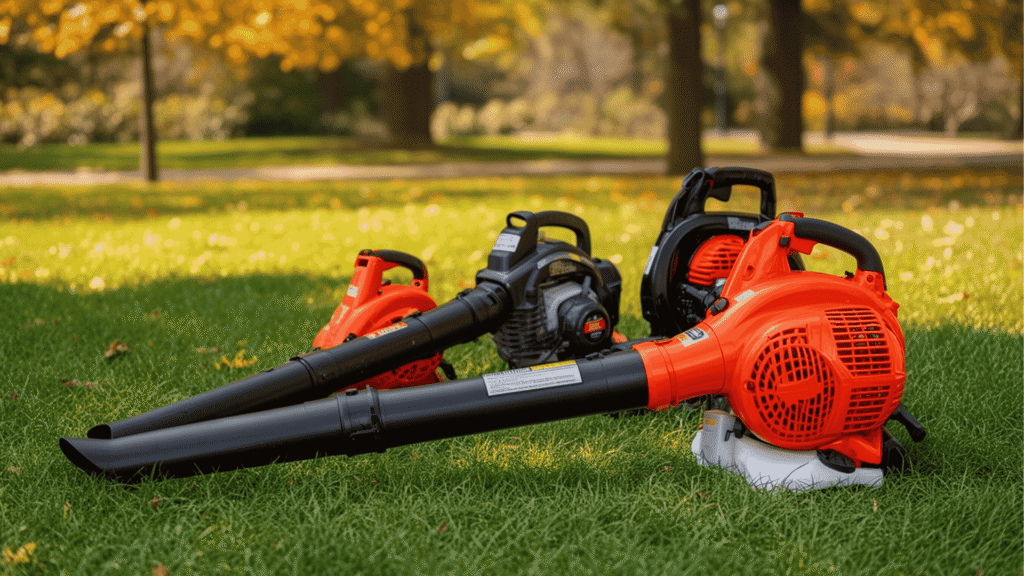
Petrol models are the most powerful option and are commonly used by professionals.
Pros:
- Extremely powerful
- Ideal for wet leaves and heavy debris
- Long runtime
Cons:
- Noisy
- Heavier
- Requires fuel and maintenance
- Higher emissions
These are best suited for large properties with significant leaf buildup.
Best Cordless Leaf Blower
For most homeowners, a cordless leaf blower offers the best balance of power and convenience.
A 36V or 40V brushless cordless model from brands like Makita or Ryobi delivers enough power for medium-sized gardens without the noise and maintenance of petrol.
Look for:
- Brushless motor (longer lifespan and better efficiency)
- At least 400–600 CFM for medium gardens
- Battery compatibility with other garden tools
For small gardens, an 18V model from Bosch is usually more than sufficient.
Best for: Small to medium gardens, regular weekly use, convenience-focused homeowners.
Best Petrol Leaf Blower
If power is your top priority, petrol is still king.
Petrol leaf blowers are ideal for:
- Large properties
- Wet, compacted leaves
- Heavy debris like twigs
- Long clearing sessions
They typically offer higher airflow and sustained performance. However, they require fuel mixing (for two-stroke engines), regular servicing, and are much louder.
Best for: Large gardens, rural properties, and heavy autumn leaf fall.
Best Budget Option
If you’re on a tight budget, a corded electric leaf blower is usually the best choice.
For under £60, you can find lightweight models that are perfect for:
- Patios
- Driveways
- Small lawns
They won’t handle heavy, wet leaves very well, but for light seasonal cleanup, they’re more than enough.
Best for: Small spaces and occasional use.
Best Leaf Blower for Large Gardens
For large gardens with multiple trees, you’ll need serious airflow.
Your best options are:
- A 40V cordless model with high CFM
- A petrol blower for maximum power
If your garden is over 1/4 acre and regularly covered in leaves, a petrol blower will save you significant time.
If you prefer lower noise and easier maintenance, a high-voltage cordless blower from Makita or Ryobi can still handle the job — though battery swaps may be required for longer sessions.
Quick Comparison Table
| Type | Best For | Power Level | Noise | Maintenance | Price Range |
|---|---|---|---|---|---|
| Corded | Small gardens | Low–Medium | Low | Very Low | £30–£80 |
| Cordless 18V | Patios & light use | Low | Low | Low | £60–£120 |
| Cordless 36V–40V | Medium gardens | Medium–High | Medium | Low | £120–£250 |
| Petrol | Large gardens | Very High | High | High | £150–£400 |
Final Recommendation by User Type
Small Garden Owner (Under 100m²):
Choose a corded or 18V cordless model. Lightweight and affordable.
Medium Garden Owner:
A 36V cordless blower offers the best balance of power and convenience.
Large Garden Owner:
High-voltage cordless or petrol for heavy-duty clearing.
Budget Buyer:
Stick with corded electric — reliable and inexpensive.
Convenience-Focused User:
Cordless is the clear winner.
Frequently Asked Questions
What CFM is good for a leaf blower?
For small gardens, 200–400 CFM is sufficient. Medium gardens benefit from 400–600 CFM. Large properties often need 600+ CFM.
Are cordless leaf blowers powerful enough?
Yes, modern 36V and 40V models are powerful enough for most home gardens.
Is petrol better than cordless?
Petrol is more powerful, but cordless models are quieter, easier to maintain, and sufficient for most homeowners.
How long do leaf blowers last?
With proper maintenance, electric blowers can last 5–10 years. Batteries typically last 2–5 years.
Final Verdict
The best leaf blower isn’t the most powerful or the most expensive — it’s the one that fits your garden and lifestyle.
- Small space? Go corded or 18V cordless.
- Medium garden? Choose 36V cordless.
- Large, leaf-heavy property? Petrol or high-voltage cordless.
For most homeowners, a mid-range cordless model from trusted brands like Ryobi, Bosch, or Makita offers the best overall value, performance, and convenience.