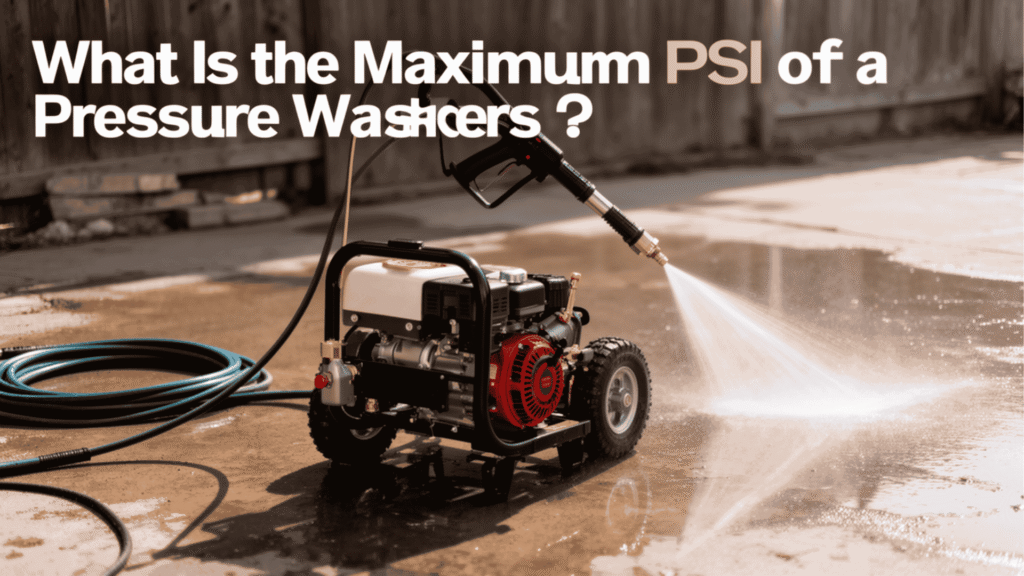
Pressure washers are widely used for cleaning surfaces ranging from patios and driveways to vehicles, fences, and industrial equipment. One of the most common questions homeowners and professionals ask is about maximum PSI (pounds per square inch). Understanding PSI is essential to choosing the right pressure washer, performing cleaning tasks safely, and avoiding damage to surfaces. This guide covers PSI ranges for residential, commercial, and industrial models, safety considerations, and recommended PSI levels for various tasks.
Residential Models
Residential pressure washers are designed for everyday home cleaning tasks. These include washing cars, patios, small driveways, garden furniture, and siding.
Typical PSI Range
Most residential electric or petrol pressure washers operate within 1,200–3,000 PSI.
- Low-end residential washers (1,200–1,800 PSI): Ideal for cars, outdoor furniture, and small patios.
- Mid-range models (1,800–2,500 PSI): Suitable for larger patios, medium-sized driveways, and fences.
- High-end residential washers (2,500–3,000 PSI): Can handle heavier dirt, moss, or minor oil stains on concrete.
These models balance power, portability, and ease of use, making them safe for homeowners without professional experience.
Commercial Models
Commercial pressure washers are designed for more frequent and demanding cleaning tasks, such as servicing restaurants, garages, rental properties, or small construction sites.
Higher PSI Ranges
Commercial models typically operate between 3,000–4,000 PSI. These washers have more powerful motors or engines and stronger pumps to handle continuous use.
- Can remove stubborn grime, thick moss, or grease from concrete and brick.
- Often come with higher GPM (gallons per minute), which allows faster cleaning of large surfaces.
- Built for durability and extended daily operation compared to residential units.
Commercial washers are still safe when used correctly, but their higher pressure requires proper training, safety gear, and caution around delicate surfaces.
Industrial Machines
Industrial pressure washers are used in manufacturing, heavy construction, shipyards, and industrial facilities.
- PSI can range from 4,000–10,000 PSI or more, depending on the application.
- These machines are designed to clean extremely tough surfaces, such as concrete floors, steel equipment, or machinery with heavy grease and grime.
- Industrial washers often include specialized nozzles, safety valves, and protective enclosures for operators due to their extreme power.
Industrial pressure washers are not suitable for residential use. Even brief contact with high-pressure streams can cause severe injuries or permanent damage to surfaces.
Does Higher PSI Mean Better?
Higher PSI does not always mean better cleaning for all tasks. Cleaning efficiency depends on both PSI and GPM (gallons per minute).
- High PSI: Provides force to remove stubborn dirt, moss, or oil.
- High GPM: Moves more water to rinse dirt effectively.
For delicate surfaces like vinyl siding, wood, painted surfaces, or cars, extremely high PSI can cause damage. Choosing the appropriate PSI for the surface and task is more important than simply selecting the highest pressure available.
Safety Considerations
Pressure washers with high PSI can be dangerous if misused.
- Injury risk: Even residential washers above 2,500 PSI can cut skin or cause puncture injuries. Industrial units are extremely dangerous.
- Surface damage: High PSI can strip paint, dent vinyl siding, or damage wood.
- Water intrusion: High-pressure water can force moisture behind siding, causing mold and rot.
Safety precautions include wearing personal protective equipment, maintaining a proper distance from surfaces, never pointing the wand at people or animals, and choosing the right nozzle for the task.
Recommended PSI by Task
Here’s a simple guide for typical PSI ranges based on the cleaning job:
- Cars and motorcycles: 1,200–1,800 PSI
- Patios, garden furniture, small decks: 1,500–2,000 PSI
- Residential driveways and sidewalks: 2,000–3,000 PSI
- Medium commercial surfaces (brick walls, fences): 3,000–4,000 PSI
- Industrial heavy-duty surfaces: 4,000–10,000 PSI
Selecting the appropriate PSI ensures efficient cleaning while reducing the risk of injury or surface damage.
Conclusion
The maximum PSI of a pressure washer varies widely depending on the type of machine. Residential models usually top out around 3,000 PSI, commercial washers operate between 3,000–4,000 PSI, and industrial machines can exceed 10,000 PSI. Higher PSI is not automatically better; cleaning efficiency also depends on water flow (GPM) and surface type. Using the right PSI for the task keeps surfaces safe, maintains efficiency, and protects the operator. Understanding PSI, selecting the right model, and following safety precautions are essential for safe and effective pressure washing.