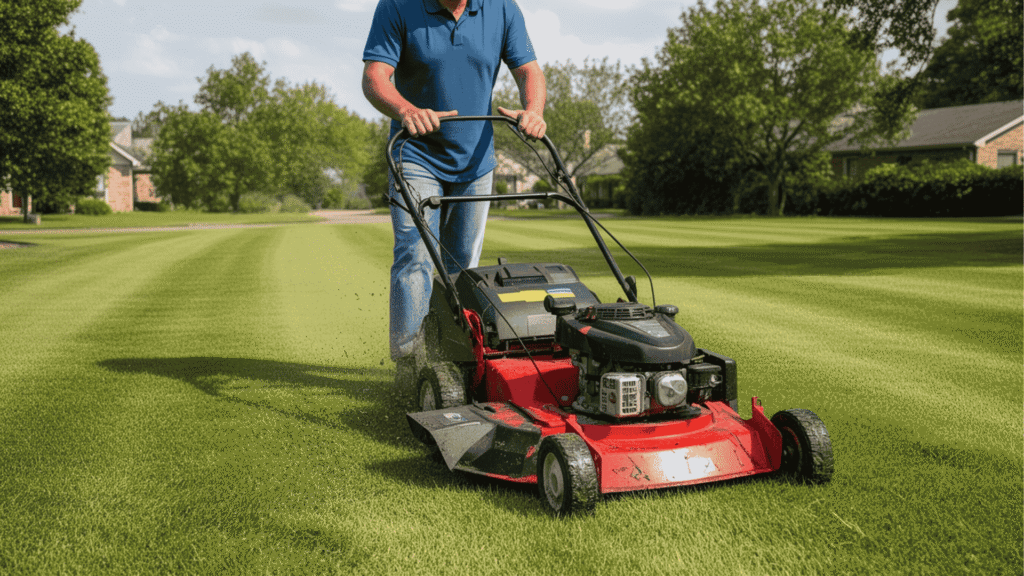
Healthy, vibrant lawns don’t happen by chance. Proper mowing is one of the most important steps in maintaining grass health. A key concept for achieving a thick, green lawn is the 1/3 rule, a simple guideline that prevents stress, promotes strong roots, and reduces the risk of disease. Understanding and applying this rule helps homeowners mow efficiently while keeping grass healthy year-round.
Explanation of the 1/3 Rule
The 1/3 rule in lawn care states that you should never cut more than one-third of the grass blade length at a time. For example, if your grass is 3 inches tall, you should cut no more than 1 inch in a single mowing session.
The principle applies to all mowing sessions, ensuring that grass is not shocked or stressed by excessive cutting. Maintaining consistent mowing heights while following this rule encourages healthy growth and improves overall lawn resilience.
Why It Matters for Healthy Grass
Cutting more than one-third of the blade can damage the grass in several ways:
- Stressed roots: Removing too much foliage forces the plant to divert energy away from root growth, weakening the root system.
- Weaker grass: Over-cut grass is less able to photosynthesize, leading to thinner lawns.
- Increased disease risk: Short, stressed grass is more vulnerable to pests, fungi, and environmental stress.
Following the 1/3 rule ensures grass remains strong, vibrant, and capable of withstanding seasonal challenges.
How to Apply It
Correct Mowing Height
- Determine the ideal height for your grass type. Most cool-season grasses thrive at 2.5–4 inches, while warm-season grasses prefer 1–3 inches.
- Calculate one-third of the current height and adjust your mowing accordingly.
Adjusting Mower Blades
- Modern mowers often have height adjustment levers. Set the blades to remove only the amount allowed by the 1/3 rule.
- For electric or manual reel mowers, adjust blade height manually.
Examples for Different Grass Types
- Kentucky Bluegrass: Maintain 3–4 inches, cut 1 inch per session.
- Bermuda Grass: Maintain 1.5–2.5 inches, cut up to 0.8 inches at a time.
- Fescue: Maintain 2.5–3.5 inches, cut 1 inch per mowing.
Adjusting mowing height based on growth ensures the lawn remains healthy across seasons.
Benefits
Following the 1/3 rule provides several benefits:
Stronger Root System
Grass leaves support root growth. When you cut lightly, roots continue to grow deeper and stronger, helping the lawn survive heat, drought, or heavy foot traffic.
Less Stress on Grass
Gradual trimming reduces shock and allows the grass to photosynthesize effectively. Healthy leaves capture sunlight and produce energy for the plant.
Reduced Disease Risk
Cutting too short or removing too much foliage can expose grass to fungi and pests. Maintaining proper mowing height and following the 1/3 rule creates a dense, resilient lawn that naturally resists disease.
Common Mistakes
Cutting More Than 1/3 at Once
Skipping the 1/3 rule stresses grass and weakens roots. Some homeowners cut excessively to save time, but this often results in a patchy, thin lawn.
Ignoring Seasonal Adjustments
Grass growth varies with season. In spring, growth is faster, so mowing may need to be more frequent but still follow the 1/3 rule. In summer, slower growth may require less frequent mowing.
Tools for Compliance
Mowers with Height Adjustment
- Use a mower with adjustable cutting height to follow the 1/3 rule precisely.
- Check the settings before each mowing session, as blade height can shift during use.
Grass Measurement Tips
- Measure the height with a ruler or garden stake before mowing.
- Keep a mental note of growth rates, adjusting mowing schedules accordingly.
These simple tools make it easier to follow the 1/3 rule consistently.
Final Recommendation
For every lawn owner, the 1/3 rule is a simple but effective guideline:
- Never cut more than one-third of the grass blade at a time.
- Adjust mowing height for grass type and seasonal growth.
- Measure your lawn regularly to avoid over-cutting.
Applying the 1/3 rule consistently promotes healthy growth, reduces stress, and protects against disease. Combined with proper watering, fertilization, and pest control, it ensures a lush, green, and resilient lawn.
FAQ
Does it apply to all grass types?
Yes. The 1/3 rule is universal, but ideal mowing heights differ depending on the grass variety. Always consider both the height and growth rate of your specific grass type.
What if I missed a week of mowing?
If your grass grows taller than usual, it’s better to cut in multiple shorter passes rather than removing more than one-third at once. This reduces stress and keeps the lawn healthy.