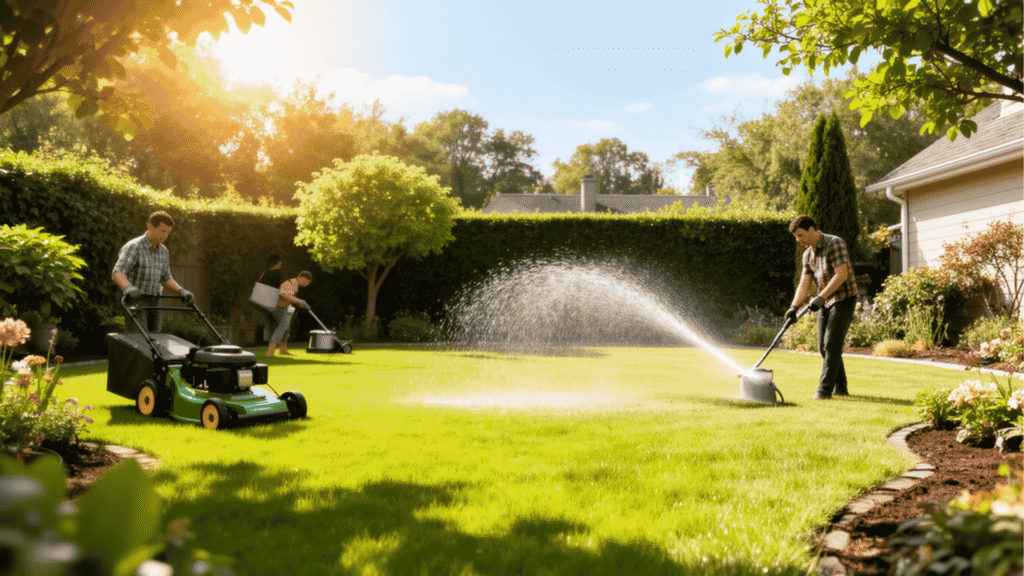
A healthy, green lawn doesn’t happen by accident. It requires consistent care, attention, and the right techniques throughout the year. Following a basic lawn care routine ensures your grass grows thick, strong, and resilient, while reducing weeds, pests, and disease. Even simple, regular steps like mowing, watering, and fertilizing can make a huge difference. This guide explains the essential steps of lawn care, with practical tips for every homeowner.
Importance of Routine Maintenance
Routine lawn maintenance is key for several reasons:
- Promotes strong roots: Healthy grass develops deep, resilient roots that withstand drought and foot traffic.
- Reduces weeds and pests: Well-maintained lawns naturally suppress weeds and resist insects or fungal infections.
- Improves appearance: Regular care keeps grass uniform, lush, and visually appealing.
- Prevents long-term problems: Proper maintenance avoids soil compaction, nutrient deficiencies, and disease outbreaks.
Consistency is critical. Skipping too many steps can weaken your lawn and make restoration harder.
Step 1: Mowing
Frequency
Mowing should be done once per week during peak growth seasons. In slower growth periods, like autumn or winter, mowing may be less frequent.
Proper Height
- Follow the 1/3 rule: never remove more than one-third of the grass blade at a time.
- Maintain optimal mowing height based on grass type:
- Cool-season grasses: 2.5–4 inches
- Warm-season grasses: 1.5–3 inches
- Proper height ensures the grass remains healthy, shades soil, and prevents weeds.
Mower Maintenance
- Keep blades sharp to avoid tearing grass, which increases vulnerability to disease.
- Check blade height and adjust as needed.
- Clean the mower deck after each session to prevent grass buildup.
Step 2: Watering
How Much and How Often
Grass generally needs 1–1.5 inches of water per week, including rainfall. Overwatering encourages shallow roots and disease, while under-watering causes stress and brown patches.
Best Times of Day
- Water early in the morning to reduce evaporation and allow grass to dry before evening.
- Avoid late-night watering, which increases the risk of fungus.
- Deep, infrequent watering promotes stronger root growth compared to shallow, frequent watering.
Step 3: Fertilization
Types of Fertilizers
- Nitrogen-rich fertilizers support leafy growth and green color.
- Slow-release fertilizers provide nutrients gradually for consistent growth.
- Specialty blends may include potassium and phosphorus for root development and overall lawn health.
Seasonal Schedule
- Spring: Encourage early growth with a balanced fertilizer.
- Summer: Use fertilizers cautiously, avoiding excessive nitrogen in hot weather.
- Autumn: High-potassium fertilizer prepares grass for winter dormancy and strengthens roots.
Correct fertilization improves vigor, color, and disease resistance.
Step 4: Weed and Pest Control
Identifying Common Problems
- Weeds: Dandelions, clover, crabgrass, and chickweed are common in lawns.
- Pests: Grubs, armyworms, and chinch bugs can damage grass roots.
- Diseases: Fungal infections often appear as brown patches or yellow spots.
Organic vs Chemical Solutions
- Organic solutions: Corn gluten meal, neem oil, or manual removal reduce chemical exposure.
- Chemical treatments: Herbicides, insecticides, or fungicides provide faster, targeted results. Always follow label instructions and consider environmental impact.
Regular monitoring helps catch issues early and reduces the need for aggressive treatments.
Step 5: Aeration and Overseeding
Benefits for Soil and Grass Health
- Aeration creates small holes in the soil, improving water, nutrient, and air penetration.
- Overseeding introduces new grass seeds, thickening thin areas and improving lawn density.
- These steps reduce soil compaction, improve drainage, and enhance resilience.
How to Do It Effectively
- Use a core aerator for best results, ideally in spring or autumn.
- Spread grass seed evenly over aerated soil and lightly rake.
- Water consistently until new grass establishes.
Aeration and overseeding can revitalize lawns, especially after heavy use or drought stress.
FAQ
Can I skip a step occasionally?
Occasional skipping is usually fine, but repeated neglect can weaken the lawn. For example, missing a week of mowing may be manageable, but skipping watering during a dry period can cause lasting damage.
How do I know my lawn needs aeration?
Signs include:
- Soil that is hard or compacted
- Pooled water after rain
- Thinning or patchy grass
- Increased weed growth
Regular observation ensures your lawn stays healthy and interventions are timely.
Conclusion
Basic lawn care is built around mowing, watering, fertilization, weed and pest control, and aeration/overseeding. Each step plays a critical role in promoting healthy growth, strong roots, and resilience against pests, weeds, and disease. Consistency and seasonal adjustments maximize results, while proper tools and techniques reduce stress on the grass. By following these steps, homeowners can maintain a green, lush lawn year-round without unnecessary effort or expense.