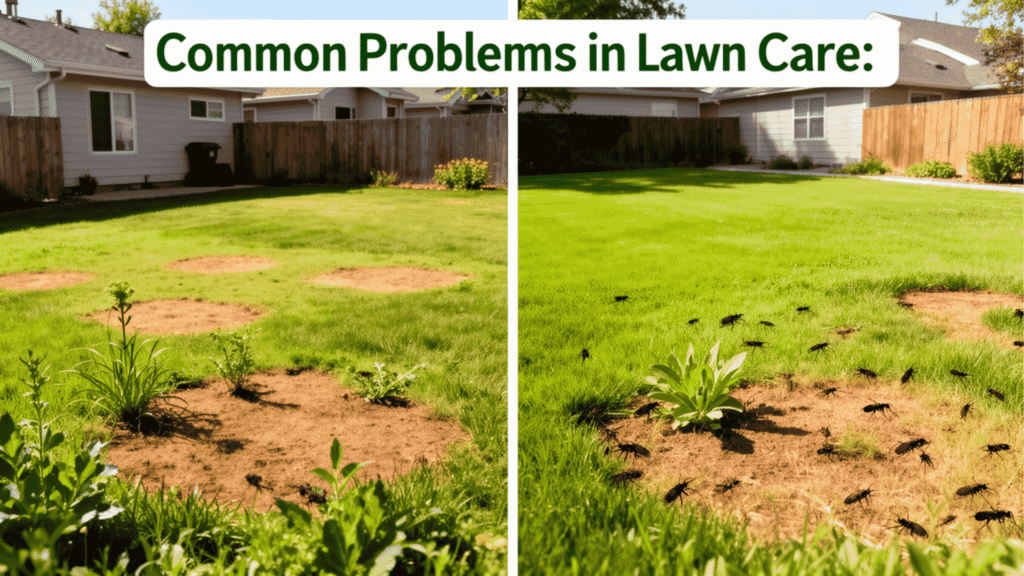
Maintaining a healthy lawn takes more than mowing and watering. Even with regular care, many homeowners face challenges such as brown patches, weeds, moss, or poor growth. Understanding the common problems in lawn care and their causes allows you to take preventative measures and apply solutions before the issues become severe. Soil quality, weather conditions, and pests are often the main culprits behind lawn problems.
Why Problems Occur
Lawn problems typically arise from three main factors:
- Soil issues: Poor drainage, compaction, or nutrient deficiencies weaken grass and encourage weeds or moss.
- Weather conditions: Drought, excessive rainfall, or temperature extremes stress grass and reduce resilience.
- Pests and disease: Insects, fungi, or bacteria can damage grass, causing patchy or thinning areas.
Identifying the underlying cause is key to applying the right solution.
Problem 1: Brown Patches
Causes
Brown patches can occur due to several factors:
- Drought: Insufficient water dries out grass, especially during hot summer months.
- Disease: Fungal infections such as brown patch fungus can create circular dead spots.
- Pests: Grubs or insects feeding on roots weaken grass and cause discoloration.
Solutions
- Water deeply and consistently during dry periods.
- Apply fungicides if disease is diagnosed, following label instructions.
- Treat pest infestations with targeted insecticides or natural solutions.
- Improve lawn health through proper mowing, fertilization, and aeration.
Problem 2: Weeds
Common Types
Weeds are one of the most visible lawn problems and compete with grass for nutrients and water. Common types include:
- Dandelions
- Crabgrass
- Clover
- Chickweed
Prevention and Removal
- Apply pre-emergent herbicides in early spring to prevent seeds from sprouting.
- Manually remove weeds before they spread.
- Maintain a dense, healthy lawn through proper mowing, watering, and fertilization to naturally suppress weeds.
- Spot-treat persistent weeds with post-emergent herbicides when necessary.
Problem 3: Moss and Algae
Causes
Moss and algae often appear in lawns due to:
- Shade: Grass struggling in low-light areas creates ideal conditions for moss.
- Poor drainage: Compacted soil or frequent waterlogging promotes algae and moss growth.
- Acidic soil: Moss thrives in low-pH conditions.
Removal Methods
- Rake moss to remove it physically.
- Apply moss-killing products containing iron sulfate or moss-specific herbicides.
- Improve sunlight exposure by trimming overhanging branches.
- Aerate soil and improve drainage to prevent recurrence.
Problem 4: Thatch Build-Up
Effects on Grass Health
Thatch is a layer of dead grass, roots, and organic matter that accumulates above the soil. Excessive thatch:
- Blocks water, nutrients, and air from reaching roots
- Increases disease risk
- Reduces root growth and overall lawn resilience
Remedies
- Dethatch using a rake, power dethatcher, or vertical mower in spring or autumn.
- Aerate the lawn to improve water and nutrient penetration.
- Maintain proper mowing and watering practices to slow thatch accumulation.
Problem 5: Poor Growth
Soil Compaction
Compacted soil reduces root growth and water absorption. High foot traffic areas, construction activity, or heavy clay soils are common causes. Aeration relieves compaction and allows air, water, and nutrients to reach roots.
Nutrient Deficiencies
Grass requires nitrogen, phosphorus, potassium, and trace minerals for healthy growth. Yellowing, thin patches, or stunted growth often indicate nutrient deficiencies. Regular fertilization with a balanced or slow-release fertilizer restores soil fertility and encourages vigorous growth.
FAQ
How do I prevent recurring problems?
- Test soil pH and fertility periodically and amend as needed.
- Follow a consistent mowing, watering, and fertilization schedule.
- Aerate and overseed annually to maintain thick, resilient grass.
- Monitor for pests, weeds, and diseases to catch problems early.
When to Consult a Professional?
- Persistent brown patches or pest infestations that DIY solutions cannot fix.
- Extensive moss or algae growth due to drainage or shade issues.
- Lawn health decline despite regular maintenance.
- Large properties or complex landscaping projects that require expertise and equipment.
Conclusion
Many lawn problems are preventable with proper care, observation, and timely intervention. Common issues like brown patches, weeds, moss, thatch, and poor growth often share underlying causes related to soil, water, and pests. Addressing these factors through routine mowing, fertilization, watering, aeration, and pest management keeps lawns healthy, green, and resilient. Regular monitoring and proactive maintenance reduce the risk of recurring problems and improve the overall appearance and longevity of your lawn. When necessary, consulting a professional ensures problems are managed effectively and efficiently.