Pressure washers are powerful cleaning tools that have transformed how homeowners and professionals maintain surfaces. They can clean everything from patios and driveways to cars, fences, siding, and outdoor furniture. By combining high-pressure water and, in many cases, detergents, pressure washers make tough cleaning jobs faster and more effective than traditional methods. Understanding how a pressure washer works is essential for choosing the right model, using it safely, and achieving optimal results.
Basic Overview
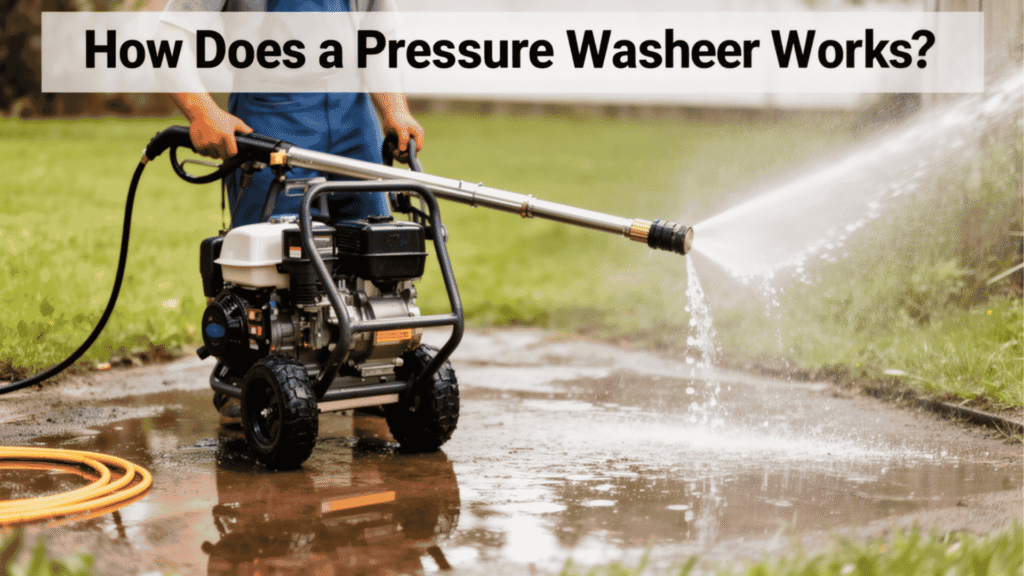
A pressure washer uses a pump to increase the pressure of water supplied from a standard hose. Unlike a regular garden hose, which delivers low-pressure water, a pressure washer directs a concentrated stream at the surface you want to clean. This combination of pressure, water flow, and sometimes detergents removes dirt, grime, algae, moss, oil, and other stains quickly.
There are two main types of pressure washers: electric and petrol (gas-powered). Electric models are lighter, quieter, and easier to maintain, making them ideal for smaller jobs. Petrol models are more powerful, portable, and better suited for heavy-duty cleaning tasks, such as large driveways, fences, or commercial projects.
Using a pressure washer effectively requires understanding its components, how it generates pressure, and how factors like PSI (pounds per square inch) and GPM (gallons per minute) affect cleaning power.
Main Components
A pressure washer is made up of four primary components:
Motor/Engine
The motor (in electric models) or engine (in petrol models) is the heart of the pressure washer. It provides the power necessary to drive the pump, which increases water pressure.
- Electric motors are quieter, more energy-efficient, and require less maintenance. They are best for small to medium tasks like cleaning garden furniture, cars, or patios.
- Petrol engines are more powerful and portable, able to generate higher pressure and flow for heavy-duty jobs. They require fuel, more maintenance, and produce more noise.
Pump
The pump is the component that converts low-pressure water into high-pressure water. It pushes the water through a small nozzle at high speed, creating the cleaning power needed to remove tough stains and dirt. Pumps vary in design; axial cam pumps are common in consumer models, while triplex pumps are used in professional or industrial models.
Hose
The hose carries water from the pump to the nozzle. Hoses vary in length, flexibility, and durability. Longer hoses allow more reach but may slightly reduce effective pressure. A high-quality hose prevents leaks and can withstand high pressure without bursting.
Nozzle
The nozzle controls the spray pattern and intensity. Common nozzle angles include 0°, 15°, 25°, and 40°. Narrow-angle nozzles (0°–15°) concentrate water pressure for tough stains. Wide-angle nozzles (25°–40°) reduce pressure and spread water over a larger area, making them safer for delicate surfaces. Specialized nozzles allow detergent application or rotating turbo action for faster cleaning.
How Pressure Is Created
Pressure washers create pressure by forcing water through a small opening at high speed using the pump. The combination of pump design and nozzle restriction generates the pressure required to lift dirt off surfaces. Essentially, water moves from a large area to a small one, increasing its force per square inch.
The cleaning effectiveness depends not only on pressure but also on water flow. High pressure removes stubborn dirt, while higher water flow (GPM) helps rinse it away. Both factors must be balanced to prevent surface damage while maximizing cleaning efficiency.
Understanding PSI and GPM
Two measurements are key to understanding a pressure washer’s cleaning capability:
- PSI (pounds per square inch): Measures the water’s force. Higher PSI can remove tough stains faster but can also damage delicate surfaces.
- GPM (gallons per minute): Measures water flow. Higher GPM cleans faster because more water is moving across the surface.
A washer with high PSI but low GPM may struggle with heavy debris removal, while a washer with high GPM and moderate PSI can clean gently but efficiently. The ideal balance depends on your surfaces and tasks.
Electric vs Petrol Operation
- Electric pressure washers: Best for small to medium tasks like car washing, patios, garden furniture, or occasional cleaning. They are quieter, lighter, and easier to maintain. Most electric washers operate at 1,200–2,500 PSI and 1–2 GPM.
- Petrol pressure washers: Ideal for medium to heavy-duty cleaning. They can reach 2,500–4,000 PSI and higher GPM, making them suitable for driveways, fences, brick, and large patios. Petrol models are more portable and do not require a nearby electrical outlet but require fuel and maintenance.
Simple Step-by-Step Process
Using a pressure washer safely and effectively involves a few steps:
- Connect the water supply: Attach your garden hose and ensure the water supply is running.
- Check the motor/engine: For electric models, plug in. For petrol, check fuel and oil levels.
- Attach the nozzle: Choose the appropriate nozzle for your task.
- Turn on the pressure washer: Start the motor or engine.
- Spray water: Hold the nozzle at the recommended distance (usually 12–18 inches from the surface). Move in smooth, even passes.
- Work methodically: Clean sections of the surface systematically to ensure even results.
- Turn off and release pressure: Switch off the machine and release residual pressure before disconnecting hoses.
FAQ
Does higher PSI mean better cleaning?
Not always. Higher PSI removes stubborn dirt faster but can damage delicate surfaces. Cleaning efficiency depends on the combination of PSI, GPM, nozzle choice, detergent use, and technique. Sometimes moderate pressure with the right detergent and nozzle gives better results than maximum PSI alone.
Tips for Safer and More Effective Cleaning
- Always test a small area before starting on the main surface.
- Use wide-angle nozzles for delicate surfaces like vinyl siding or painted wood.
- Apply detergents or cleaning solutions when needed to remove tough stains.
- Maintain a safe distance from surfaces to prevent etching or damage.
- Use appropriate personal protection, including gloves and goggles.
Conclusion
Pressure washers are versatile tools that clean more efficiently than traditional methods. They rely on a combination of PSI, GPM, pumps, and nozzles to remove dirt from a wide variety of surfaces. Electric washers are ideal for light to medium tasks, while petrol washers handle heavier-duty jobs. Understanding how pressure is created, how PSI and GPM work together, and using the right nozzle and detergent ensures safe, effective, and long-lasting cleaning results. Proper technique prevents damage and maximizes the washer’s efficiency, giving you clean surfaces quickly and safely.